From August 6 to 8, the 6th National Symposium on Lignin Science and Technology together with the Biomass Chemical Industry Development Forum was grandly held in Jinan, Shandong Province. Co�organizers of the conference included Guangdong University of Technology, the National Key Laboratory of Green Papermaking and Resource Recycling at Qilu University of Technology (Shandong Academy of Sciences), and South China University of Technology. Centered on cutting�edge advances in high�value utilization of lignin and biomass chemical engineering, the conference covered themes including fundamental theories and methodologies of lignin, lignin�based fine chemicals, lignin�derived carbon materials, lignin�based polymer materials, catalytic conversion of lignin, and high�value utilization of lignocellulose and other biomass resources. Through keynote presentations, parallel special sessions, youth�scholar and graduate�student forums, as well as poster exhibitions, participants conducted in�depth discussions on key scientific and technical challenges spanning fundamental theories to industrial applications, building an exchange platform for academic innovation and industrial collaboration.
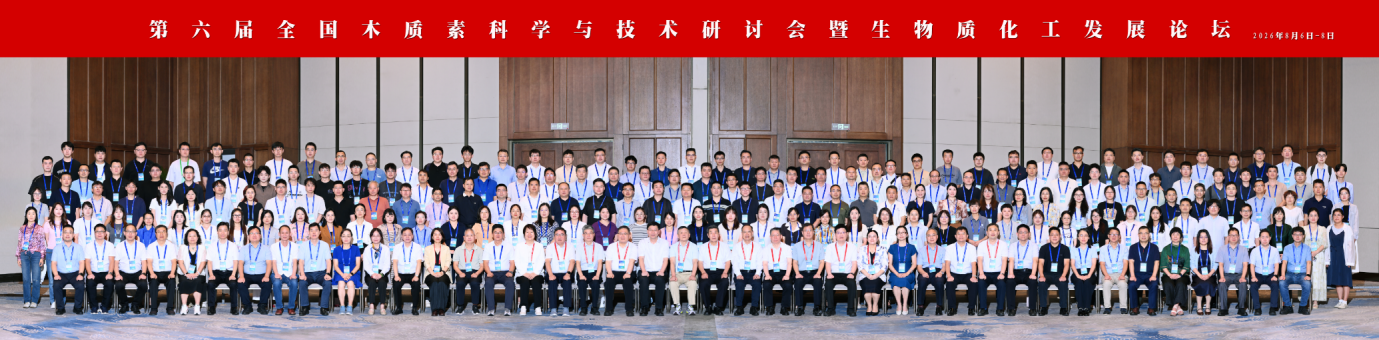
Professor Qiu Xueqing, President and Deputy Secretary of CPC GDUT Committee, and Professor Wu Yantao, Secretary of CPC Qilu University of Technology Committee, served as Conference Chairs. Many distinguished experts attended and delivered keynote speeches, including Academician Zhang Tao from the Dalian Institute of Chemical Physics, Chinese Academy of Sciences; Academician Han Buxing from the Institute of Chemistry, Chinese Academy of Sciences; Academician Shi Bi from Sichuan University; and Academician Wu Yiqiang, Secretary of CPC Central South University of Forestry and Technology Committee.
At the opening ceremony, Professor Qiu Xueqing pointed out that against the backdrop of profound global energy restructuring and China’s pursuit of green�low�carbon economic growth, high�value utilization of lignin constitutes a core bottleneck and strategic breakthrough for raising the economic value of full�fraction renewable biomass. It also acts as a critical link connecting natural cycles with industrial civilization. The symposium was originally initiated to track academic frontiers, stimulate intellectual exchanges, serve national strategic demands, and jointly explore industrial�application pathways. This symposium will further advance breakthroughs in China’s biomass chemical industry and high�value lignin utilization, contributing Chinese wisdom and solutions to global innovation in biomass chemical engineering.
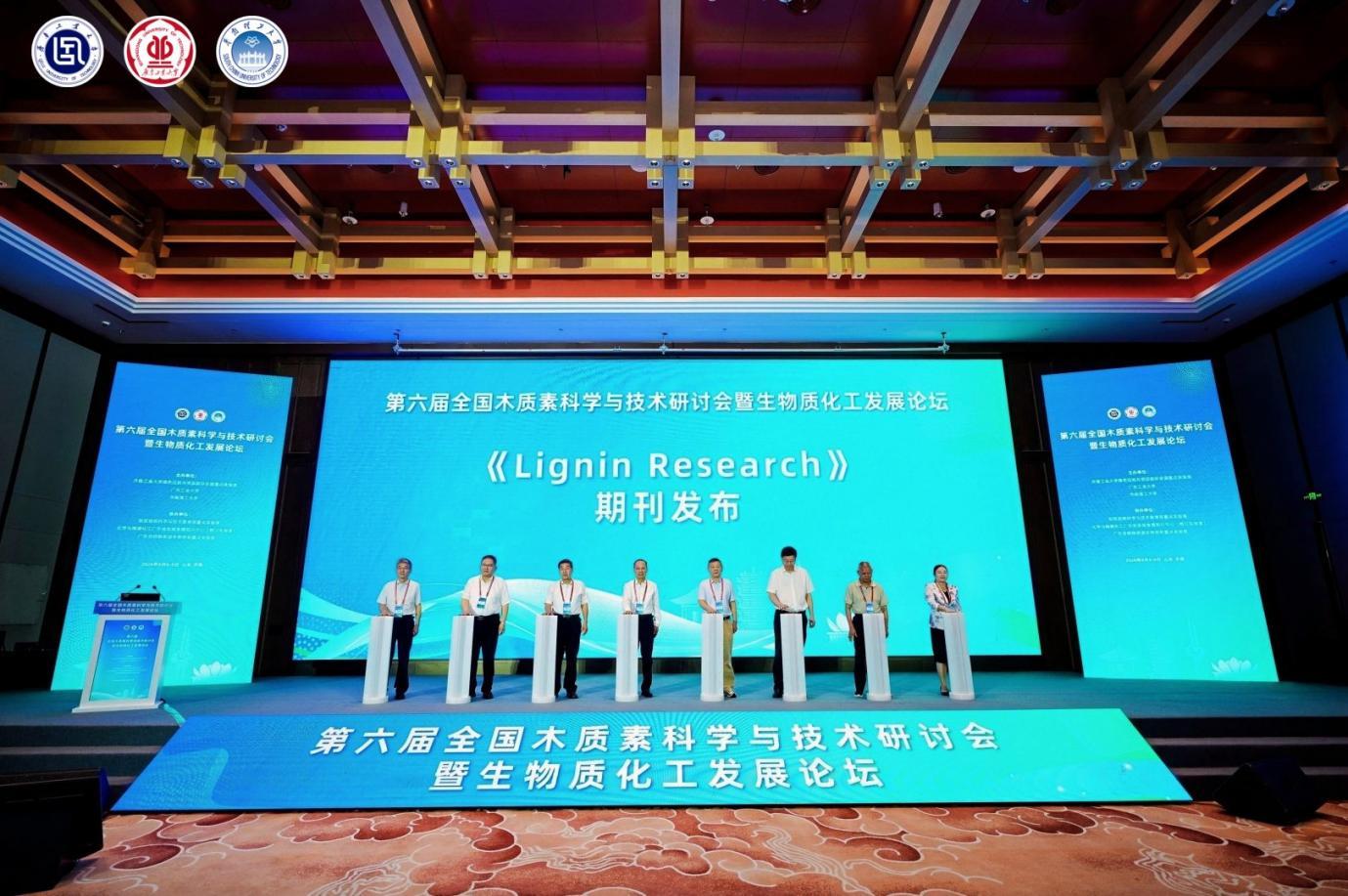
The opening ceremony witnessed the official launch of Lignin Research, an international professional journal founded and edited�in�chief by Professor Qiu Xueqing. Qiu briefed the audience on the journal’s development. Together with Shi Bi, Han Buxing, Wu Yiqiang, Wu Yan, Sun Runcang, Chu Fuxiang and Ji Xingxiang, he unveiled the journal. Targeting frontiers in lignin science and technology, Lignin Research focuses on fundamental lignin research, technological innovation and relevant interdisciplinary fields. It aims to build a specialized, world�class international academic exchange platform, pool global research strengths in lignin studies, disseminate cutting�edge innovations in this field, and deliver a high�quality academic carrier for lignin�related scientific progress and interdisciplinary collaboration.
During the keynote session, Academician Zhang Tao presented innovative research on single�atom catalysis and biomass catalytic conversion, offering new technical possibilities for partially replacing fossil feedstocks with renewable carbon resources. Academician Han Buxing elaborated on advances in green chemistry and technologies, providing references for high�efficiency conversion of biomass resources under low�energy�consumption and low�emission conditions. Professor Qiu Xueqing systematically outlined the technology roadmap for biomass chemical utilization, offering guidance for pathways toward high�value resource exploitation.